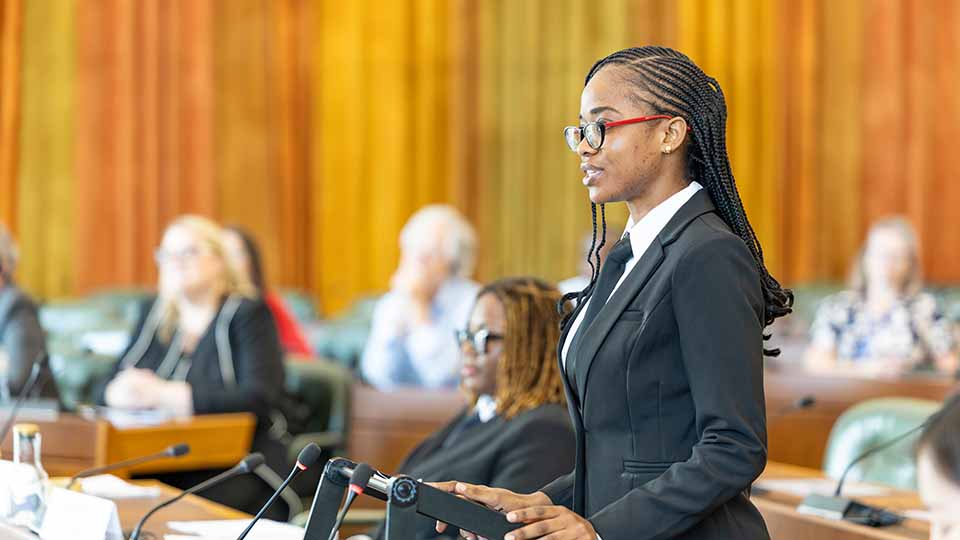
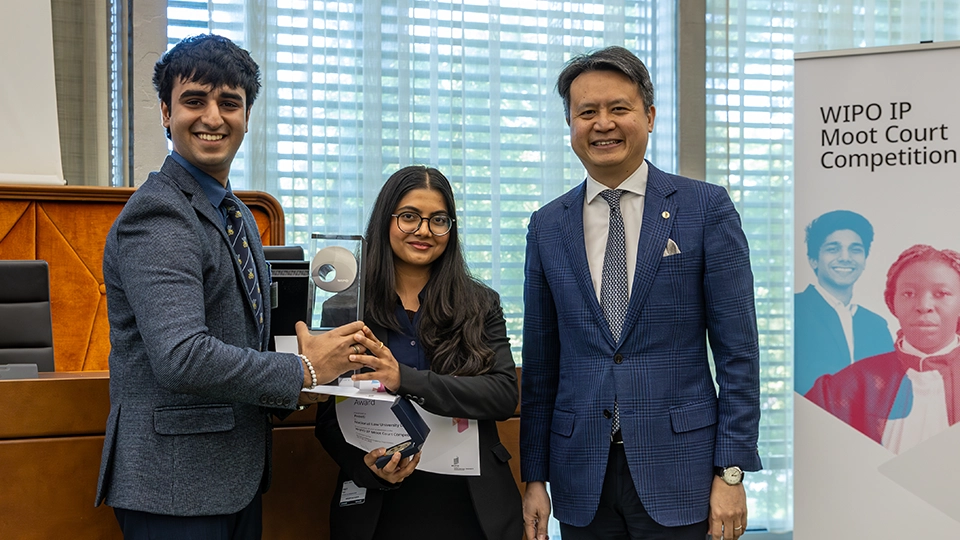
Applications for the 2027 WIPO IP Moot Court Competition are now open!
Ready to take your advocacy skills to the international stage? Apply by November 6, 2026 for a chance to compete with top law students from around the world and argue a cutting-edge intellectual property dispute before international IP experts.
This edition's moot problem will explore the fast-evolving world of live streaming, where innovation, intellectual property rights, and online enforcement intersect.
Participating teams will be selected through a competitive video application process. The top eight teams will advance to the international stage and compete in the Finals in Geneva on June 8 to 10, 2027.
Get ready for the 2027 WIPO IP Moot Court Competition!
How to Apply
The Application Guidelines [MR2.1] [PDF] provide a step-by-step overview of the application process, including eligibility requirements, supporting documents, and video submission specifications.
Before applying, please review the following materials:
Apply to start your application for the 2027 WIPO IP Moot Court Competition.
Before completing the application form, please make sure that the Declaration Form has been duly signed.
To finalize your application, please submit the video requested in the Application Guidelines
Tentative Competition Timeline (2026-2027)
All times are given in Geneva time (GMT+1)
| Phase | Dates |
| Application Period | October 12 – November 6, 2026 |
| Announcement of Selected Teams | November 30, 2026 |
| Release of moot problem | December 10, 2026 |
| Deadline for submission of requests for clarifications | December 17, 2026 |
| Responses to requests for clarifications | January 15, 2027 |
| Deadline for written submissions | February 1, 2027 |
| Online rounds | March 1-12, 2027 |
| Quarter Finals (Geneva) | June 8, 2027 |
| Semi Finals (Geneva) | June 9, 2027 |
| Grand Finale & Awards (Geneva) | June 10, 2027 |
Una experiencia internacional única para adquirir competencias prácticas en defensa de la PI
Fue una experiencia increíble. Los supuestos y el marco jurídico estaban descritos con gran detalle, y me sentí muy segura a la hora de comprender las preguntas planteadas. La oportunidad de establecer contactos con los jueces y los organizadores me ayudó a superar el síndrome del impostor.
Sidra Ahmed , Universidad de Kent, participante en la edición de 2025 del concurso de la OMPI de simulación judicial sobre PI
Phase |
Dates |
Application Period |
October 6 – December 15, 2025 |
Announcement of Selected Teams |
December 29, 2025 |
Release of moot problem |
December 29, 2025 |
Deadline for submission of requests for clarifications |
January 16, 2026 |
Responses to requests for clarifications |
January 23, 2026 |
Deadline for written submissions |
February 23, 2026 |
Online rounds, culminating in announcement of teams advancing to Geneva |
Late March, 2026 |
Quarter‑Finals (Geneva) |
June 24, 2026 |
Semi‑Finals (Geneva) |
June 25, 2026 |
Grand Finale & Awards (Geneva) |
June 26, 2026 |
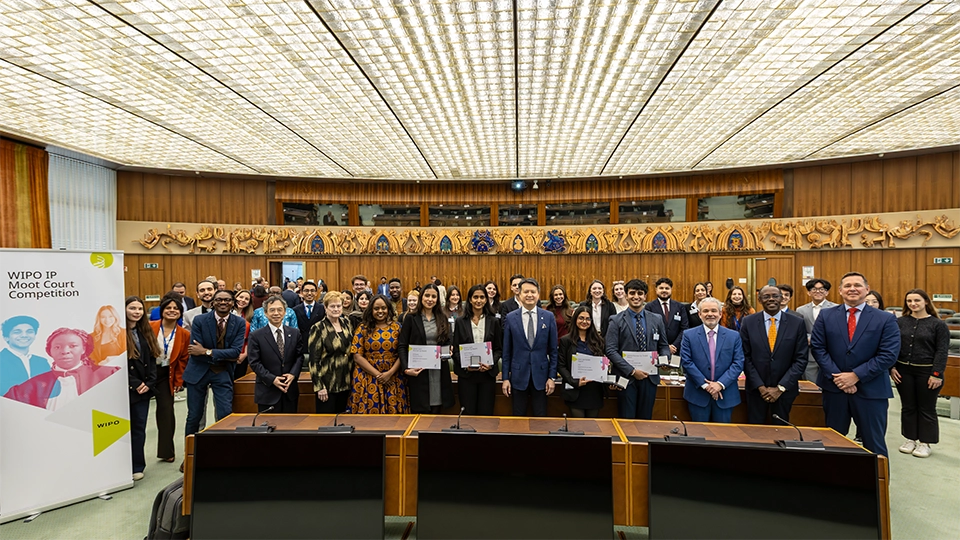
“It was an incredible experience. The hypothetical facts and legal framework were highly detailed, and I felt very confident in understanding the questions posed. The opportunity to network with the judges and organizers helped overcome imposter syndrome!”
- Sidra Ahmed, University of Kent, 2025 Moot Court Participant
La edición de 2026, de un vistazo
Inscripciones
215
equipos
50
países
Rondas escritas y orales virtuales
48
equipos
30
países
Rondas orales finales
8
equipos
7
países
- Universidad de Boston (Estados Unidos de América)
- Universidad Tecnológica de Tallin (Estonia)
- Universidad Nacional de Derecho – Delhi (India)
- Universidad Nacional de Ciencias Jurídicas de Bengala Occidental (India)
- Universidad de Lagos (Nigeria)
- City St. George's, Universidad de Londres (Reino Unido)
- Universidad Ewha Womans (República de Corea)
- Universidad de las Indias Occidentales - San Agustín, (Trinidad y Tabago)
Ediciones pasadas
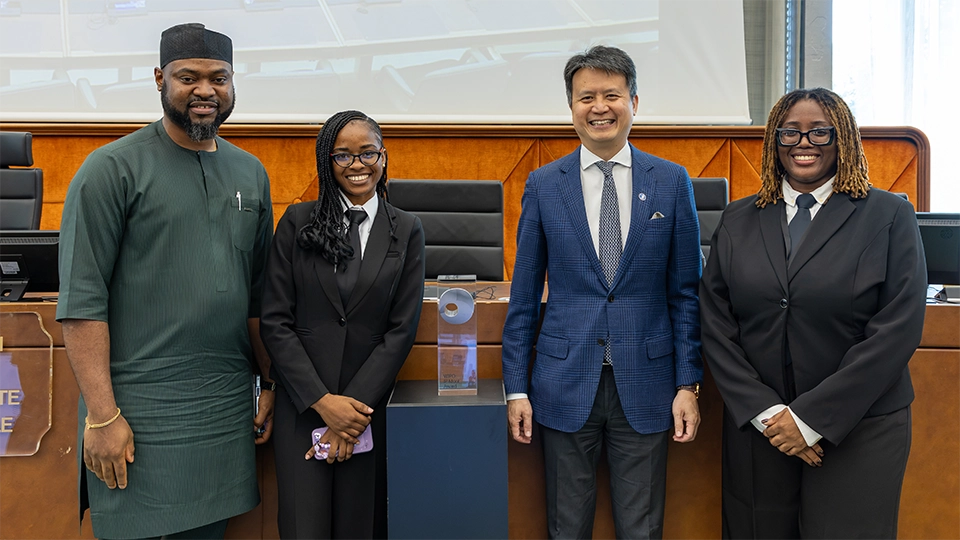
2026
¿Qué ocurre cuando una tecnología vanguardista de drones diseñada para salvar vidas se convierte en objeto de una controversia mundial por la PI?
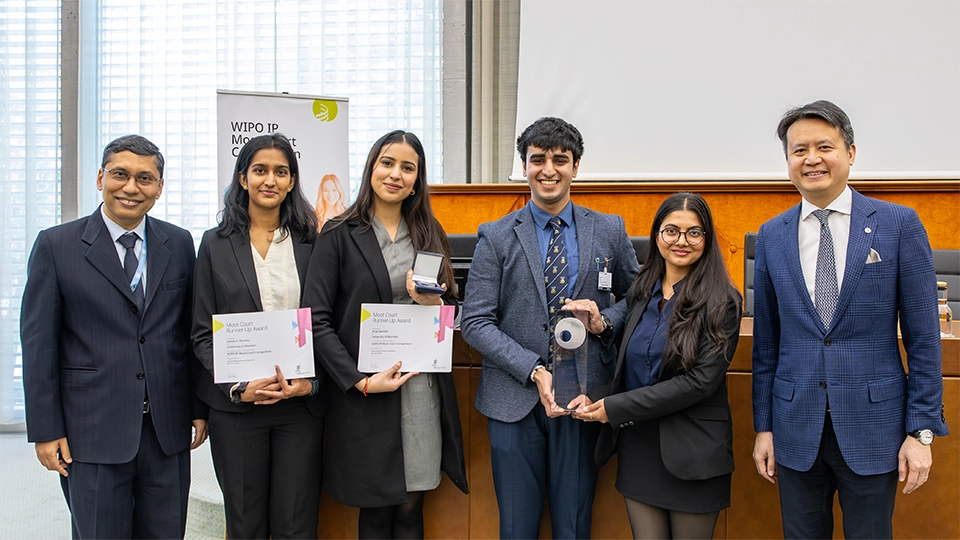
2025
Cuando la inteligencia artificial y los tókenes no fungibles (NFT) entran en contacto con el patrimonio indígena, ¿a quién pertenece la creatividad?